What Should You Fix First When Planning a Major Home Renovation?
You bought a house that needs work—or you’ve lived in your home for years and you’re finally ready to renovate.
The kitchen needs updating.
The bathrooms are outdated.
The floors need replacing.
Maybe you want to remove walls and create a more open layout.
But there’s one important question homeowners should answer before choosing cabinets, tile or paint:
What should we renovate first?
At A.P. Design & Construction, we believe a successful renovation should follow the right order. Start with the house itself, then work toward the finishes.
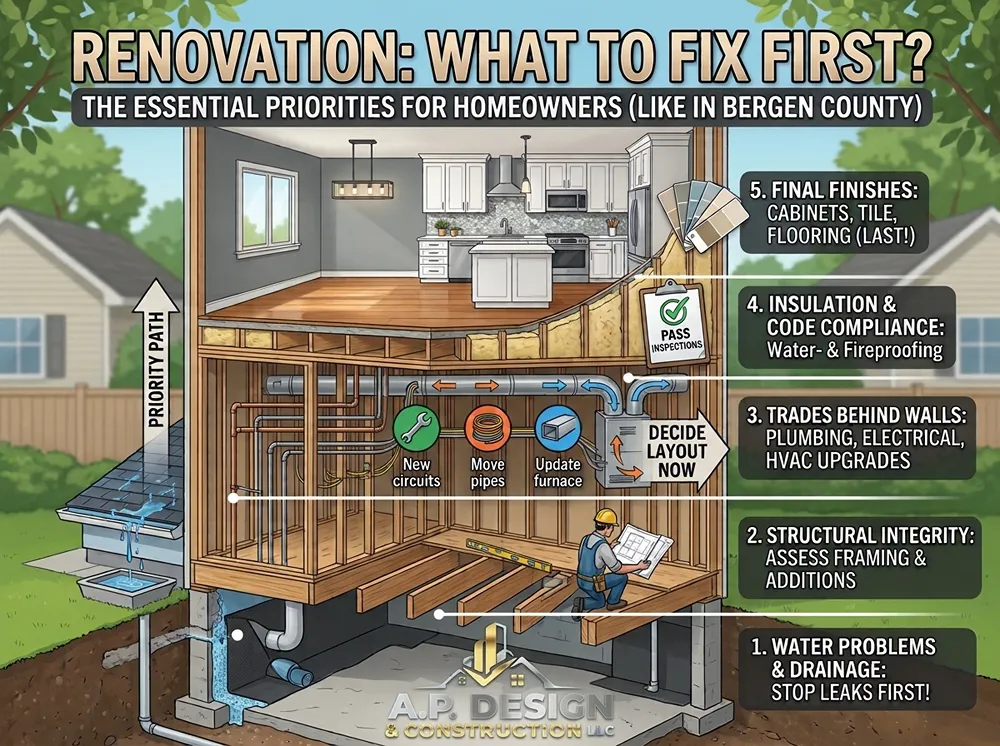
1. Start With Water Problems
Before investing in a beautiful interior, make sure water isn’t getting into the house.
This can include:
- Roof leaks
- Foundation water
- Poor drainage
- Plumbing leaks
- Improper exterior flashing
- Basement moisture
Installing new drywall, flooring or cabinetry before addressing a water problem can mean paying to do the same work twice.
2. Evaluate the Structure
If your renovation involves removing walls, creating larger openings, adding a second floor or building an addition, structural planning needs to happen early.
This may involve evaluating:
- Foundations
- Floor framing
- Load-bearing walls
- Beams
- Columns
- Roof structure
- Existing modifications
The finishes should be designed around a structure that works—not the other way around.
3. Decide on the Layout Before the Trades Begin
One of the most expensive times to change your mind is after construction has started.
Before rough plumbing and electrical begin, you should have a clear understanding of where major elements will go.
For example:
Where is the kitchen island?
Where is the refrigerator?
Where are the vanities?
Where do you want lighting?
Where will the TV go?
These decisions affect multiple trades.
Moving something on a drawing is easy.
Moving plumbing, wiring and framing after installation is not.
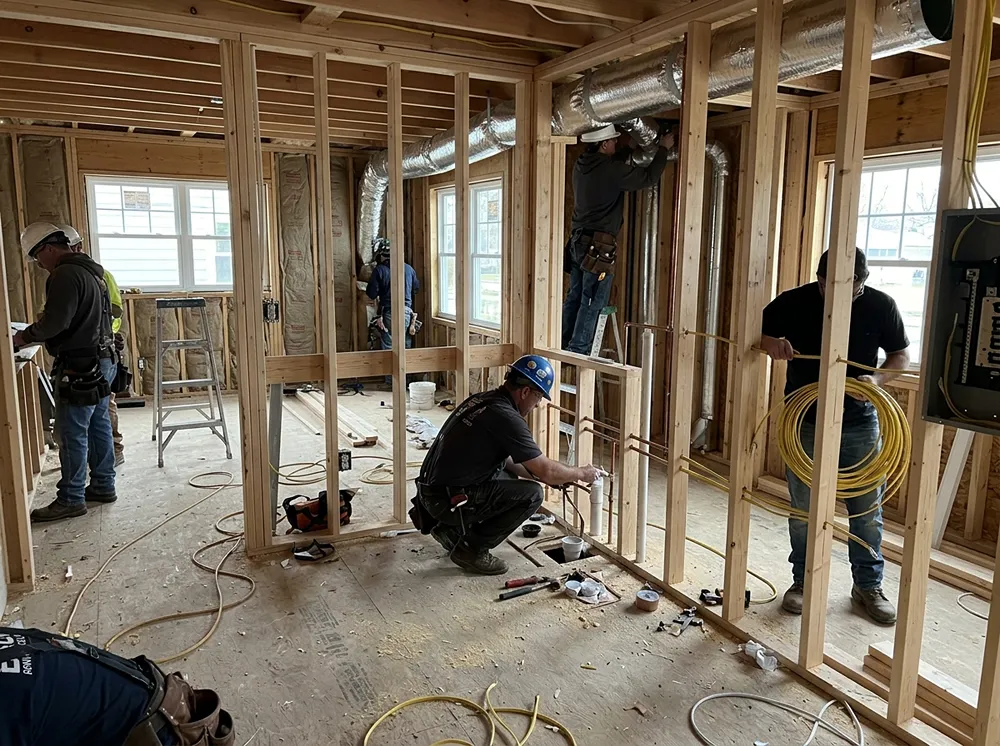
4. Evaluate Plumbing, Electrical and HVAC
A major renovation isn’t just an opportunity to make the house look newer.
It’s also an opportunity to evaluate the systems that make the house function.
Older homes may need electrical upgrades.
A new kitchen may require additional circuits.
New bathrooms may require plumbing modifications.
An addition may change heating and cooling requirements.
These systems need to be considered before the walls are closed.
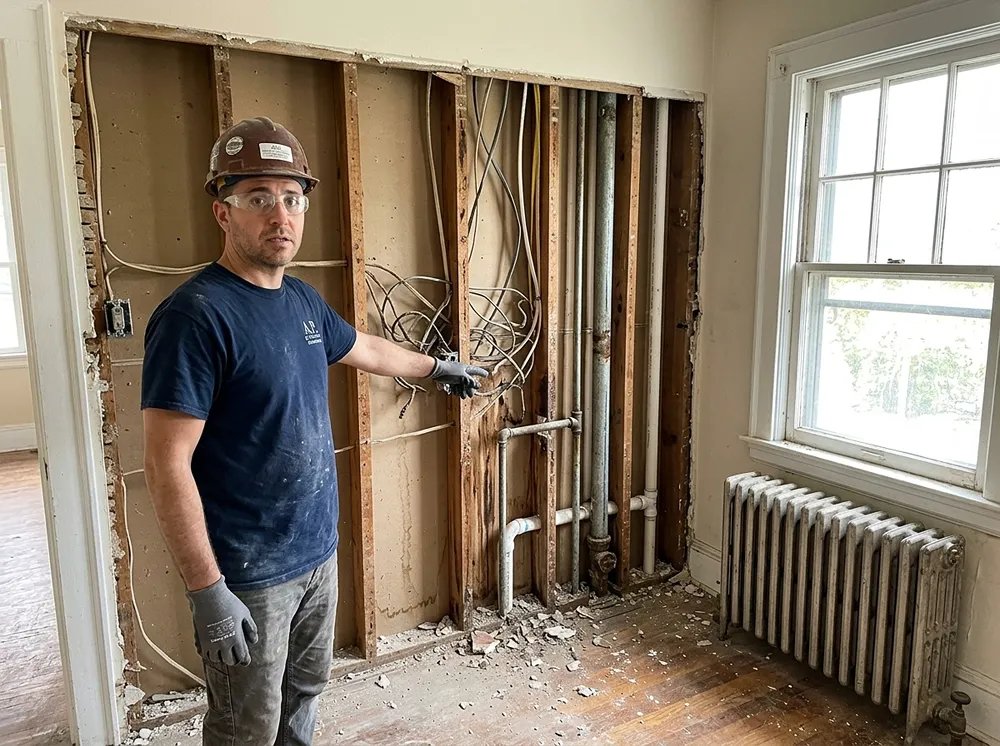
5. Complete the Work Behind the Walls
This is one of the least exciting stages for homeowners—but one of the most important.
Framing.
Plumbing.
Electrical.
HVAC.
Insulation.
Waterproofing.
Fire blocking.
These aren’t usually the photos people post when showing off their renovation.
But they have a major impact on how the home performs for years to come.
6. Pass Inspections Before Moving Forward
Construction has an order for a reason.
Required rough inspections should happen before work is covered.
Once those stages are complete, the project can move into insulation, drywall and finishes.
Trying to rush through these steps to get to the “beautiful part” of the renovation can create problems later.
7. Then Come the Finishes
Now the transformation becomes much more visible.
Depending on the project, this stage can include:
- Flooring
- Cabinets
- Tile
- Countertops
- Interior doors
- Trim
- Painting
- Plumbing fixtures
- Lighting
- Appliances
These selections matter—but they work best when everything underneath them was properly planned first.
Don’t Start Your Renovation With the Pretty Stuff
It’s natural to get excited about kitchens, bathrooms, flooring and finishes.
But a successful renovation isn’t built from the outside in.
It’s built from the inside out.
The structure comes before the cabinets.
Waterproofing comes before the tile.
Electrical planning comes before the lighting.
And good planning comes before construction.
The Right Order Can Save Time and Money
Many expensive construction problems aren’t caused by one major mistake.
They’re caused by doing things out of sequence.
A trade arrives before another trade is finished.
Materials are selected too late.
A layout changes after rough work.
Something gets covered before it’s properly checked.
Good construction management is about understanding not only what needs to happen, but when it needs to happen.
Planning a Major Renovation in Bergen County?
At A.P. Design & Construction, we help homeowners look at the entire project—not just the finished space.
From planning and design through construction, inspections and final details, our goal is to make sure each phase is completed in the right order.
Because a beautiful renovation starts long before the finishes go in.
Considering a major renovation, addition or whole-home transformation in Bergen County? Contact A.P. Design & Construction to start planning your project the right way.